
The Health Implications of Poor Quality Sanitary Pads on Nigerian Women
Amidst price increases on menstrual pads, Nigerian women also struggle with low-quality sanitary pads and potential risk to their health, affecting accessibility and quality of life.
Dove Suleiman*, a 28-year-old model in Abuja, North Central Nigeria, was on set fitting for a brand when she noticed she had bled through her sanitary pad, staining the white dress she was modelling. She ran into the bathroom, washed it off, and returned the dress. She didn't have a spare sanitary pad and had to make do with the one she had on until she got home. Dove's experience is not an isolated case; other women have experienced situations where their pads leaked out in public, staining their clothes, leaving them feeling distressed and embarrassed.
Many women in Nigeria say they find it difficult to manage their periods due to the unavailability of sanitary products in public spaces like schools, religious houses and offices. In a report by PaidHr, 8o per cent of the 47 women surveyed said their workplaces do not provide sanitary care products. This reduces productivity and leads to absenteeism due to fear of staining their clothes.
For many in their late 20s and early 30s, their period journey began with A, a menstrual care brand that offers sanitary towels, pads, and panty liners worldwide. They ran TV and radio adverts that dominated the airwaves and were known for visiting schools across Nigeria to educate young girls about menstrual care and distribute free sanitary pads.
"As a young lady growing up, I remember the A pad advert that promises you staying dry for up to 8 hours, no change, and you won't have to constantly check yourself," 29-year-old Loveth Buba*, a media professional, reminisces.
Unfortunately, the nostalgia women once felt when using the pad is now replaced by unpleasant experiences, such as absorbency and adhesive issues, which have forced them to seek alternatives. But so far, those alternatives have not provided lasting solutions. Many women still experience challenges with sanitary pads, even as they try to navigate their reproductive choices.
Loveth noticed her flow became heavier and lasted longer during the early months after she got a contraceptive implant. She usually used 4-5 pads on average for an entire day, but after getting the implants, the number of pads she used per day doubled as her flow became quite heavy.
"I've had to jump from different products just to get what works for me. Even at that, I have to constantly worry about changing because they get filled up so easily," she said.
In January 2026, 124 women shared their experiences on the quality of sanitary pads in an anonymous HumAngle survey. Of the 124 women who responded, 119 reported noticing changes in the quality of the sanitary pads they use. According to the women, these changes, which ranged from thinner pads to poor absorption and sanitary pads leaving them with rashes, have led them to seek other alternatives and try multiple brands on the market.
What changes the women noticed
Women who noticed changes in sanitary pad quality
Out of 124 women, 119 women said they have noticed changes in the quality of sanitary pads they use.
Among those who noticed quality changes, 94 said they noticed poor adhesive that no longer holds pads in place.
63 said they noticed thinner pads and shorter wings.
53 said they noticed rashes, itching, and irritation.
45 said they noticed leaks from pads that leads to constant changing.
58 said they noticed that pads have become less absorbent.
22 said they noticed that pads have strong chemicals and plastic smell.
What did the women switch to?
Women who switched to another brand of sanitary pad
After noticing quality changes, 103 said they switched to using another brand of sanitary pad.
15 said they started using diapers.
6 said they started importing their pads.
5 said they switched to menstrual cups.
11 said they started using tampons.
1 said she makes her own disposable pads from old clothes.
How much do they spend on sanitary pads in a month?
Said they spend ₦1,500 - ₦3,900
Said they spend ₦4,000 - ₦5,900
Said they spend over ₦8,000
Said they spend ₦6,000 - ₦7,900
89 women said they spend ₦1,500 - ₦3,900.
16 women said they spend ₦4,000 - ₦5,900.
5 women said they spend over ₦8,000.
13 women said they spend ₦6,000 - ₦7,900.
Seeking solutions abroad
The current issues with Nigerian menstrual care brands have pushed some women to seek solutions abroad.
30-year-old Nji Bong has always had heavy flow whenever she was on her period. She used several variants from the A brand because she noticed they would get soaked quickly, leaving her with rashes and bruises despite taking multiple showers. To help, her mother, who lives in the United States, would send her heavy-duty pads from the same brand, and the changes she noticed were significant.
"I noticed that the rashes stopped, they [the pads] absorbed better, and the glue stayed on the pants. I believe that there is a difference in the quality of pads abroad and the ones in Nigeria," she describes.
She is not the only one who thinks this. Ada Agu* also gets her pads from friends abroad whenever they come into the country. She believes that the Nigerian-made ones cause irritation and rashes because they are scented.
"With the imported ones, I don't have boils, irritation, and I am not scratching endlessly- there is no leakage, it is comfortable, and it's long," she said.
Sending items across borders often involves the services of freight and delivery companies. Over the three years, Nji Bong's mother sent her pads from the United States, and they spent at least ₦150,000 per year on shipping.
Aisha Isah*, on the other hand, currently spends about ₦18,000 to buy a unit of the kind of sanitary pad she uses. It comes in a carton containing 4 units of 18 pads, which costs about ₦74,000.
Through her time in secondary school and in the earlier years of her menstrual cycle, she struggled to find the right pad for her flow. She would ask friends who were going abroad to help her purchase the specific brand of sanitary pad until it became available in select stores in her city. Now, she buys in bulk as soon as she has money.
“I have never really thought too critically about the cost, but I think that it is influenced by the fact that my periods are not like a regular period. I think because of the shege [troubles] I have seen, I don’t think of the cost like that, and I am just really grateful it exists,” she shares.
According to the National Library of Medicine, about 10 out of 100 women experience Heavy Menstrual Bleeding, also known as Menorrhagia. For these women, their period is heavier than normal, lasts longer than 5-7 days, and requires them to change sanitary products, such as tampons, pads and menstrual cups, more often in between flows or cycles. This condition comes with pain, affecting their daily life and sometimes leading to iron deficiency and anaemia.
While many women say imported pads serve them better, others have different experiences. In 2025, 32-year-old Marline Oluchi migrated to Norway to start a new life. In Nigeria, she started using M sanitary pads when she noticed that the A sanitary pads she grew up using had drastically declined in quality and didn’t help with her heavy flow. Moving to Norway, she couldn’t find M sanitary pads.
“Thinking I would find better quality here, I didn’t pack a lot of sanitary pads. For me, the A sanitary pad that is very rampant here, is worse than the ones in Nigeria despite the drop in the quality of the ones in Nigeria. I have tried another brand I found here, and I wasted my money. If I had my way to just import M sanitary pads, I would do that,” she lamented.
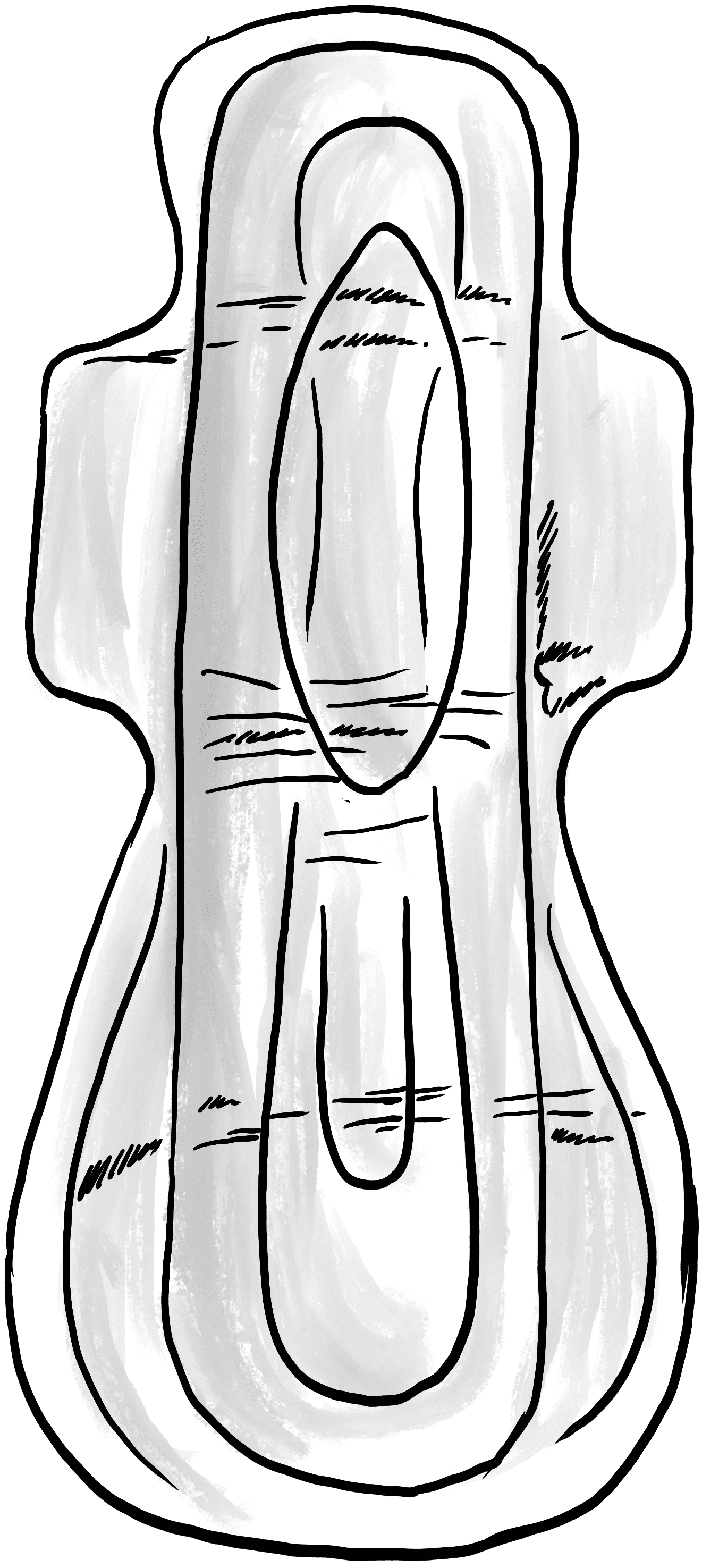
Finding the right sanitary pad with long-lasting absorption and the right length is important for women. Long-lasting absorption is critical to preventing leaks, and the right length is critical to full coverage of the front-back area where menstrual flow spreads, leaving the woman at risk of leaks.
How pad length compares
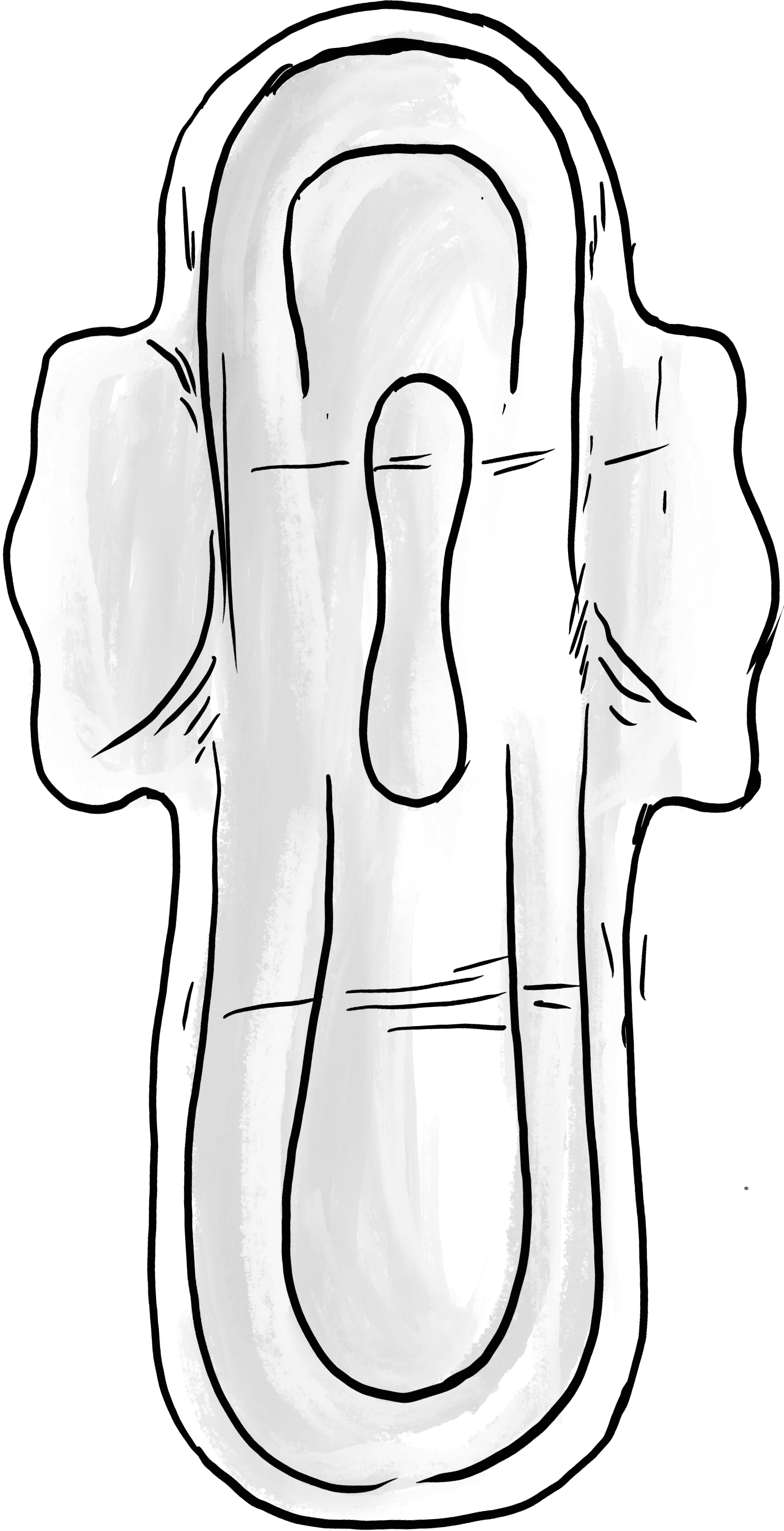
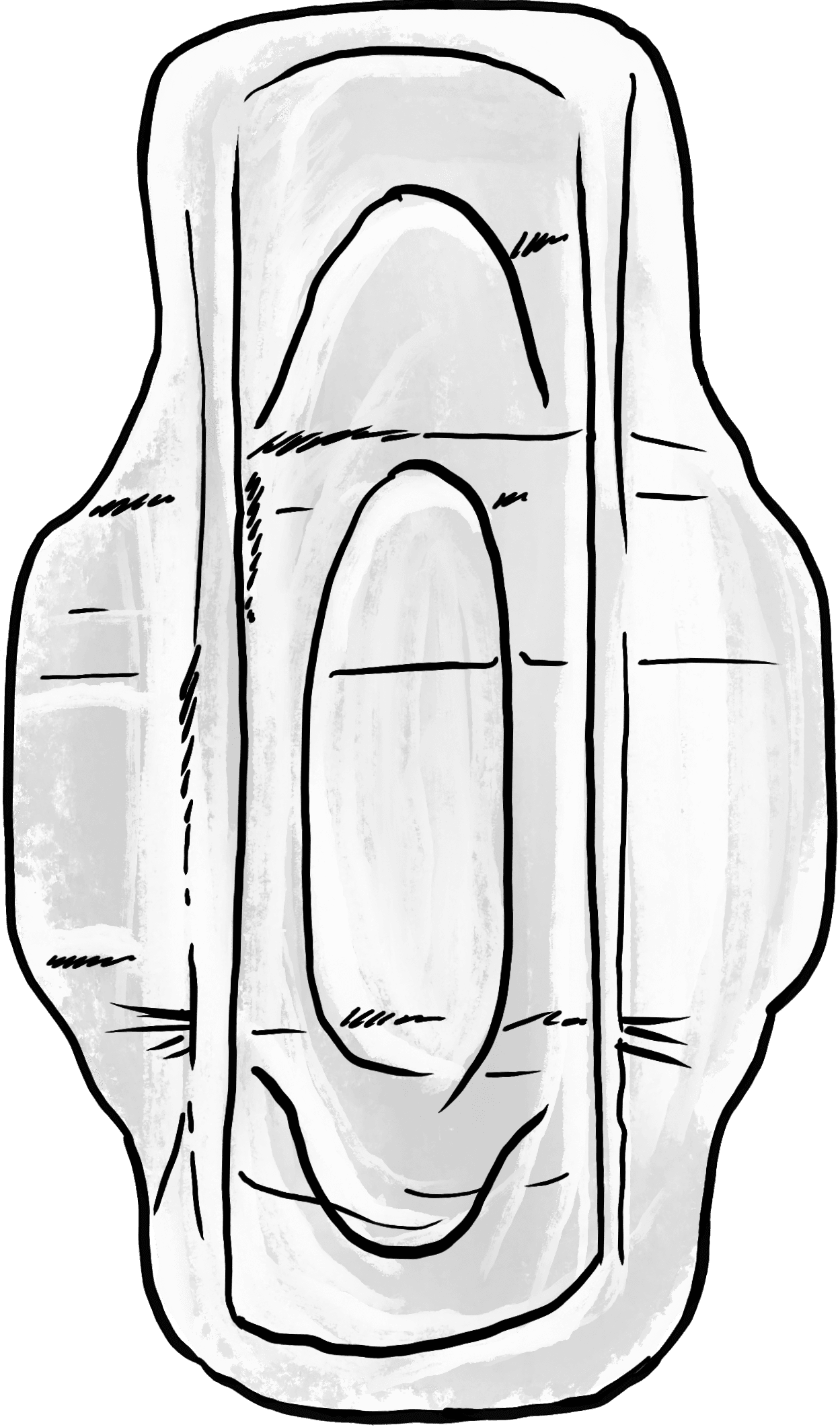
Oftentimes, their search for the right pad to meet their needs and peculiarities of their menstrual flow has led them to try multiple brands and even other menstrual products, such as tampons and menstrual cups. After switching to a brand called M because A started to “thin out” and cause leaks, 23-year-old Stephanie Chiziterem began using tampons and layering them with sanitary pads during her menstrual cycle because she noticed pads weren't as absorbent.
“In 2021, I could no longer use A. By the time I would wake up in the morning, have my bath, and get to school, I would have had to change my pad like three times because it just got too thin, and sometimes it would leak through even when the pad wasn’t full. Also, the price increased,” Stephanie said, taking us back to her experience as a University student.
The higher cost of heavier flows
In January 2020, under the administration of Former President Muhammadu Buhari, the Finance Act 2019 was signed into law. One of the things the law did was exempt essential goods and services, including locally manufactured menstrual hygiene products, from value-added tax.
However, this did not put a significant dent in sanitary pad prices, as industry and market forces continue to play a role, and period poverty still prevails in the country, as an estimated 37 million women and girls in Nigeria are unable to afford or access sanitary products.
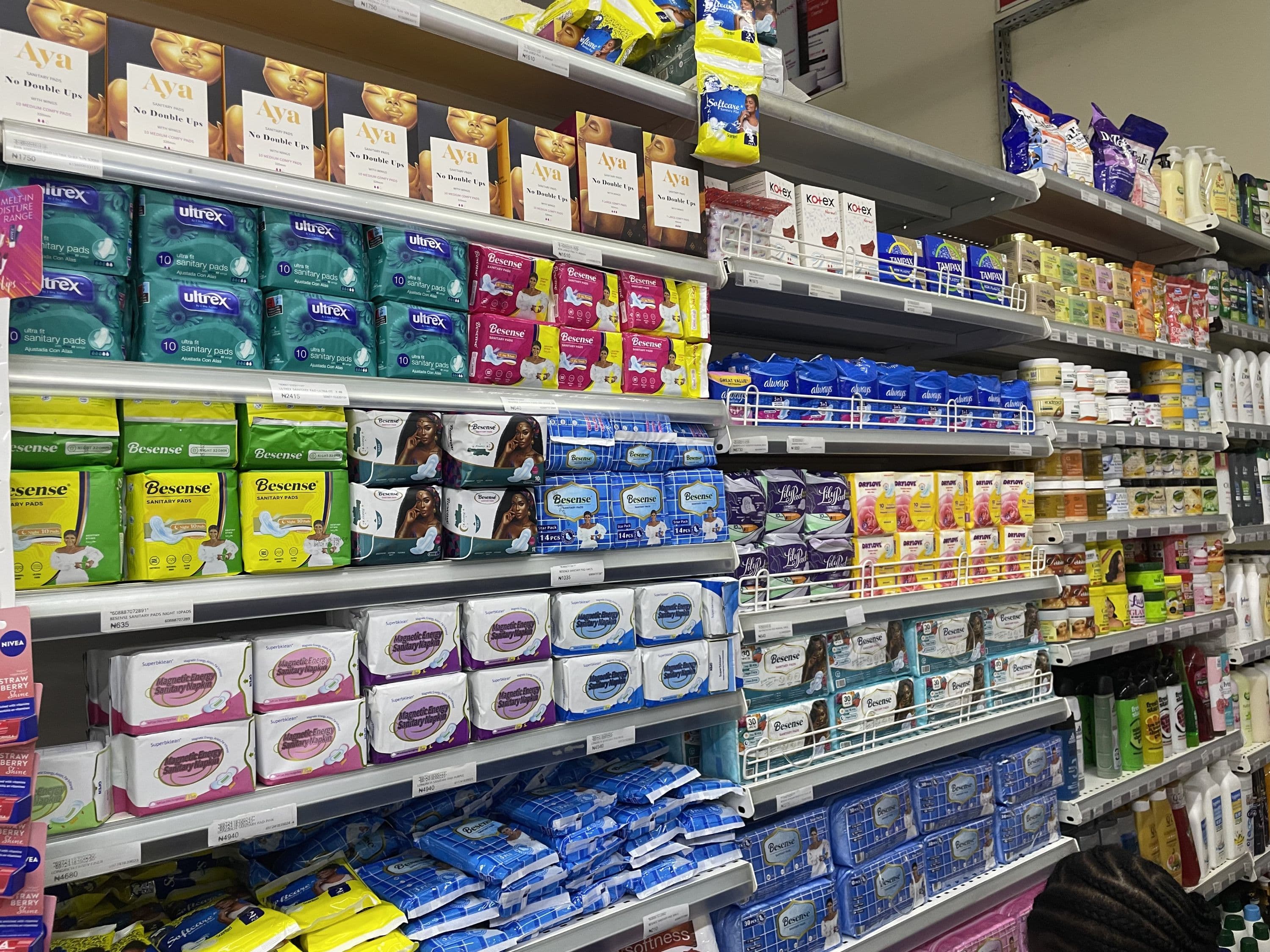
In 2019, the average cost of sanitary pads in Nigeria was about ₦300 to ₦450. Over the years, due to a cost-of-living crisis, inflation, and the current economic realities in the country, the cost has increased by 400 per cent, bringing the average price to about ₦2,800-₦3,500 depending on the brand, size, and quantity.
Now a graduate and in the labour market, Stephanie is trying to find her balance and manage leaks by using tampons and sanitary pads at the same time, and spends about ₦6,000 every month on her period.
“That is a significant amount of money for someone like me,” she says, adding that because sanitary pad prices keep rising, she has decided to switch to menstrual cups.
What women told us
Tap portraits to listenFrom high costs to safety concerns, who regulates these things?
Growing up, Bliss Nnamdi always used A because that was what she saw her mother using. According to her, she could use it throughout the day and even tried the brand's different options until she started noticing changes.
“Back then, it was okay. I was using the blue and purple ones. When I couldn’t see the blue one, I would use the purple one-it was good; it even held my flow better than the blue one. Then I started noticing changes, all of a sudden, I started getting rashes, and my vagina area started to swell, then came the leakage, and I boycotted A as a whole,” she shares, adding that for treatment, she had to visit a doctor who told her it was the pad she was using and recommended a cream.
According to Zeenaht Abdullahi, a gynaecologist with five years of experience and currently working at the Wuse District Hospital, Abuja, contact dermatitis associated with sanitary pad use has been linked to several materials and chemical components used in pad production. The synthetic top sheet, typically made from polyethene or polypropylene, can trigger reactions in women with sensitive skin. The superabsorbent polymer core, typically made from sodium polyacrylate, has also been implicated, as have the adhesives used to secure the pad to underwear.
Fragrances and deodorants used in many popular brands are among the most common chemical sensitisers, with compounds such as benzyl alcohol and limonene known to provoke allergic reactions. Chlorine, used in the bleaching process to achieve the characteristic white appearance of pad materials, produces dioxin byproducts that have been associated with irritation.
“Beyond chemical sensitisation, pad rash can arise from a combination of mechanical and environmental factors that are particularly relevant in Nigeria's tropical climate,” she adds, stating that prolonged wear, which is common due to cost considerations and limited access to adequate sanitary products in some communities, compounds all of these risks significantly. Hormonal fluctuations across the menstrual cycle can also alter skin sensitivity and pH, making the vulvar skin more reactive at certain points than others.
As women try to cut costs and stay safe from health challenges, some have resorted to using diapers and even making their pads from old clothes and fabrics. According to Dr Zeenaht, the safety of these alternatives exists on a spectrum. It is almost entirely dependent on the materials used, hygiene practices observed, and the consistency with which they are maintained.
“The key determinant across all of these alternatives is hygiene education. Without a clear understanding of how to clean, dry, store, and replace these products, women may be substituting one risk for another,” she advises.
The regulation of sanitary pads includes their components, safety, and quality before they are sold in the market. The two bodies responsible for this in Nigeria are the National Agency for Food and Drug Administration and Control (NAFDAC) and the Standards Organisation of Nigeria (SON).
NAFDAC functions as a primary regulator of many consumer health-related products, including menstrual products. They oversee the approval, inspection, and quality compliance of said products before they are distributed in the market. SON, on the other hand, defines and develops national standards that manufacturers and imported products must meet regarding the materials used, safety, and performance criteria.
Listed as a medical device and focused on safety and performance, NAFDAC specifies all sanitary pads registered on its website. However, when trying to access SON's library to purchase the 2018 Standard for Sanitary Pad under code NIS 291 at ₦8,000, error messages were encountered. HumAngle also reached out to SON through a Freedom of Information (FOI) request. They replied, redirecting HumAngle to the SON library, saying the document was available for public purchase. They also stated that while the national standards generally specify safety parameters and quality benchmarks for products, including sanitary pads, they do not endorse or legitimise the use of unlawful, hazardous or unapproved substances. HumAngle visited SON's library again after receiving their letter and noticed that trying to purchase the 2018 Standard for Sanitary Pad no longer returned an error message.
On a global scale, the International Standards of Organisation (ISO) set up an active technical committee working to develop the international standards for menstrual products, including safety, performance, and general requirements. However, since their creation in 2022, there is no fully published universal standard yet, as most outputs are still under development as of early 2026.
In August 2025, Nigeria validated and adopted its first National Policy on Menstrual Health and Hygiene Management (MHHM) to address challenges faced by women and girls. The policy addressed the cost of sanitary products, lack of water, sanitation, and hygiene (WASH) facilities and period stigma.
However, despite this policy and multiple complaints from Nigerian women about the quality of pads in the market, there are few to no documented cases of regulatory bodies recalling sanitary products in response to complaints.
The standards for sanitary pads in Nigeria are not readily available to the public, and there are currently no laws requiring manufacturers to list detailed materials, chemical components, fragrances, or preservatives on their packaging. Dr Zeenaht worries that this gap leaves Nigerian women at the mercy of manufacturers and open to the downfall of using substandard products.
“Menstrual health in Nigeria has historically been treated as a peripheral concern within the public health conversation, and this is reflected in how policy is shaped and enforced. Until there is deliberate legislative attention, stronger inter-agency collaboration, and a cultural shift that places menstrual health within the mainstream of women's healthcare policy, the current regulatory posture will remain inadequate to truly protect Nigerian women from the risks associated with sanitary product use,” she says.

Reporting and writing: Shade Mary-Ann Olaoye
Photos: Shade Mary-Ann Olaoye
Digital layout: Shade Mary-Ann Olaoye
Illustration: Akila Jibrin
Web design: Attahiru Jibrin